Assignment 26.1 Film studies
In this report I will be discussing two filmmakers, Tim
Burton and Ang Lee, and the theories behind their films, such as the auteur
theory and the queer theory. I will do this by studying their background and creative signature that can be linked with their films and the theories behind them. The particular films I shall be looking at is Charlie and the Chocolate Factory (2005) and Brokeback Mountain (2005).
Tim Burton, the well known director of ‘Charlie and the
Chocolate Factory’, ‘Edward Scissor hands’ and many more, can be generally
considered an Auteur filmmaker. The Auteur theory states that a film mirrors
the artistic vision of the filmmaker, typically due to recognisable and recurring
themes. Tim Burton’s films follow a recurring unique dark and quirky theme,
reflecting his artistic vision. Due to this, his films are easily recognisable.
Many things can be noticed in a Tim Burton film, such as his use of darker
colour schemes or themes that are sometimes contrasted with bolder colours such
as yellow and purple. He also has a continuous use of the same actors, the main
one famously being Johnny Depp who has starred in several of his films.
Tim Burton has been named one of the most popular directors from the 20th century and his talent and originality was what kept him and his films successful. He worked on many short films through Disney at the start of his career, but had some creative differences with his colleagues. Despite this, Disney recognised his talent, and gave him the opportunity to make the short film 'Vincent' in 1982. The animated short film about a boy who wanted to be just like Vincent Price and was even narrated by Price himself. The film was a overall success and won many awards. Burton made other short films, including the film, 'Frankenweenie' (1984), which despite it being deemed inappropriate for children and was not released, it was noticed by an actor who then came to believe that Burton was the man they wanted directing their films. This film ended up being a great success, and Burton instantly became popular. Eventually Burton moved away from this type of film as he wanted to do something new, and so he moved back to his original unique and quirky method of film making which only brought him more success.
Tim Burton has been named one of the most popular directors from the 20th century and his talent and originality was what kept him and his films successful. He worked on many short films through Disney at the start of his career, but had some creative differences with his colleagues. Despite this, Disney recognised his talent, and gave him the opportunity to make the short film 'Vincent' in 1982. The animated short film about a boy who wanted to be just like Vincent Price and was even narrated by Price himself. The film was a overall success and won many awards. Burton made other short films, including the film, 'Frankenweenie' (1984), which despite it being deemed inappropriate for children and was not released, it was noticed by an actor who then came to believe that Burton was the man they wanted directing their films. This film ended up being a great success, and Burton instantly became popular. Eventually Burton moved away from this type of film as he wanted to do something new, and so he moved back to his original unique and quirky method of film making which only brought him more success.
 In 'Charlie and the Chocolate factory', Burton has used a dull colour scheme, typically with the dominant colours grey, brown and black, to build an atmosphere and create the setting. This automatically sets the unconventional tone of the film in typical Tim Burton style. This film is actually stated to be 'a film as quirky as anything he has ever done' and there are many reasons for this. What then contributes to make this film, along with most of Tim Burton's work, so memorable and interesting is that the dark colour scheme for the base of the content has been combined with contrasting foils of a brighter or deeper tone, such as yellow, purple, gold and green (Apparent in the above right image). This builds to the quirky effect of a Burton film. The lighting also has the same effect as it is bright in some areas and casting shadows in others. The contrast of light and dark if a technique Burton uses in most of his films and so evokes the audience into noticing Burton's work instantly.
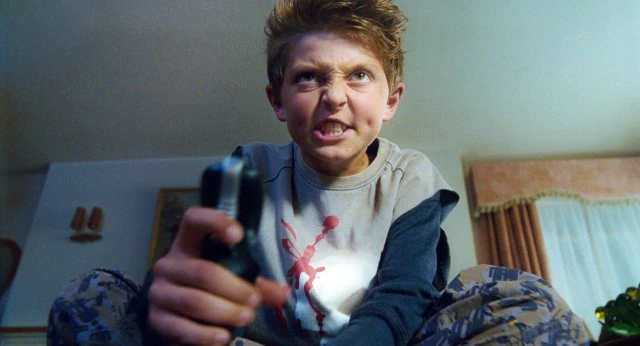 The camera is also used in a specific way to build to the effect of the film. Close ups of the characters' faces are used constantly throughout in order to show off the exaggerated facial expressions and the give the audience a feel into the emotions of characters and the mood of the scenes. This occurs repeatedly with the main characters of this film, particularly when showing how the children found their golden tickets, (evident in left images) and when they are in the chocolate factory as these are the most exciting and emotive scenes for these characters and so their facial expressions are emphasised.
Burton's use of music in this film is also quite interesting as all the songs written for this film and sung by the 'Oompa Loompa' characters are all completely different genres of music. This would have been done to represent all of the different characteristics of the children's characters, and additionally subtly reinforcing the quirkiness of Tim Burton and his work himself.
Tim Burton's use of the same actors, (mainly Johnny Depp), has helped portray his visions as a director. These actors are able to understand the vision Burton has when making a film, and so add to the general atmosphere of a classic 'Tim Burton film'. A continuous use of this director adds a subtle difference in the shade of meaning and expression of the film. The actor can often become part of the fabric in creating a specific filmmaker's film effectively, as well as building creative synergy without having to take too many risks.
Like many Tim Burton films, Charlie and the Chocolate factory's genre is fantasy and adventure. Burton is able to make the genre very apparent by following conventions in his own way to grip the audience and attract them to this genre. For example, there are subtle hints to magic throughout their journey through the factory. Also, the world they live in seems to differ from ours slightly, which is a convention linked to the genre of fantasy as it incorporates hyper real, idealised representations of 'normal' things. The sub genre of this film is family. It is evidently a family-fantasy film since it is targeted at a young audience and yet also appeals significantly to the older, secondary audience. However, it can still be seen as unconventional due to such a dark colour scheme and quirky themes which can often appear as eerie and even with slightly sinister undertones at times. The family-friendly genre is apparent through the characters and narrative as there is a consistent use of children throughout and the entire narrative is centred around a loving family. Both the written and spoken language appeals to the audience as it is understandable and interesting to a younger audience and can also be fairly strange and different, meaning it fits with the genre well, once again gratifying the audience. This is reinforced by the camera angles used as they have been used specifically to capture the strange and interesting moment the characters have and portray them in a unique, quirky way.
Ang Lee, the Taiwanese director of 'Brokeback mountain',
born in 1954, can be considered a filmmaker following the 'Queer Theory' in his
film. The Queer Theory is the idea of 'heteronormativity', expressed through
film. It follows the ideas of promoting all sexualities and creating a
normality for them. Ang Lee's film 'Brokeback Mountain' follows the Queer
Theory as it creates an interesting and shocking narrative centralising around
two homosexual cowboys during the 1960s and 70s in America. Using the technique
of shock is key when considering the Queer Theory as when covering ideas such
as sexuality, it is ideal to use unexpected conventions regarding masculinity
and homosexuality in order for the audience to be left feeling shocked. This is
an effective method in making this film successful as it moves the audience and
gets them thinking as expectations are broken and changed.
Ang Lee has become one of today's greatest contemporary
filmmakers. At New York University, he served as Assistant Director on Spike
Lee's student film, Joe's Bed-Stuy Barbershop: We Cut Heads. After writing many
screenplays, Ang Lee finally made an appearance in the film scene in 1991 where
he used dramatic-comedy to reflect the struggles in different cultures. His next
film, The Wedding Banquet, in 1993 where he covered homosexuality of a
Taiwanese man, (Lee really began to show himself being an effective filmmaker
covering the Queer Theory here). Through these films, and many of his other
films, Ang Lee won incredible awards such as The best adapted screenplay and
was nominated for The best foreign film Oscar and the best picture Oscar, and so
many more due to his unique and moving film making technique, covering many interesting
or controversial topics.
One thing that makes Ang Lee a clear and successful Queer
filmmaker, alongside all the other emotional and controversial topics he covers,
is his continuous use in the same type of roles. In Brokeback Mountain and many
other films following theories such as the Queer Theory, Lee creates the roles
of homosexual men in unexpected ways. For example, the two leading characters in
which this film centres around, are Cowboys from Wyoming, a state in the US.
The fact they are cowboys already makes this narrative unconventional as Cowboys
are never perceived as homosexuals, stereotypically. In addition to this, they follow
this unconventional pattern since they are implied to be masculine and ‘manly’ –
qualities not always thought of regarding homosexual men. They also have wives
and families of their own, demonstrating how they had to hide their true identities.
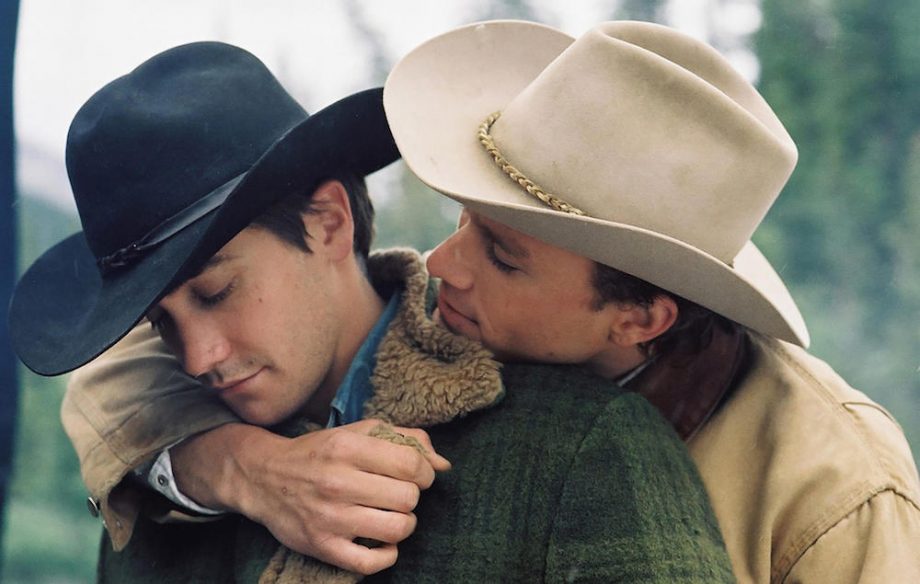

The colours and lighting of this film is contrasting light and dark, (shown in above images), mirroring the tone of the film and reinforcing the narrative as the characters have a fairly sad life where they have to hide who they really are. However, they have happier parts to their lives when they fall in love and are able to spend time together. Lighting in this film has been used effectively throughout to represent the tone of the scenes. One example (seen in bottom image) is that after one of the protagonists die and his partner goes to visit his family and childhood home. The house is fairly dark with little artificial light, meaning there were many shadows and dark corners. This mirrors the mood after the devastating death.
:max_bytes(150000):strip_icc()/Brokeback-Mountain-Promotional-Stills-brokeback-mountain-31873862-1769-1191-56a389dc3df78cf7727de880.jpg) The camera angles
used were mainly long shots (see right image) to give the audience a large view into the whole of
the setting and build the atmosphere. This was important as the narrative was
very simple and most of the excitement and emotion was built through the unique
atmosphere created. The sound also added to this as the music was it was
simple, fairly quiet and instrumental, in order to be clearly used to build up
the tone for the audience and the diegetic sounds of the scene was often
distant to build the tone subtly without overpowering the simple narrative
unravelling.
The camera angles
used were mainly long shots (see right image) to give the audience a large view into the whole of
the setting and build the atmosphere. This was important as the narrative was
very simple and most of the excitement and emotion was built through the unique
atmosphere created. The sound also added to this as the music was it was
simple, fairly quiet and instrumental, in order to be clearly used to build up
the tone for the audience and the diegetic sounds of the scene was often
distant to build the tone subtly without overpowering the simple narrative
unravelling.
The genre of this film is a hybrid genre; Western-romance Drama.
The genre itself is fairly unconventional as a soft, moving romance not often
the main focus of a western film. The typical conventions of a romance such as big
cities, flowers, and pink and red colours have not been used, and yet much of
the iconography fits the conventions of a western film, such as Cowboy hats,
boots and horses. This emphasises the fact that the romance was so hidden, that
it is even slightly hidden from the audience too. A main part of what makes Ang Lee's emotional films so successful is through reinforcing the narrative in most codes and conventions of the film. This constantly reminds the audience of the emotional and important themes and builds up the tone to grip the audience the whole way through.
1880.. words


